
Amy Scott Rooker On the Life She Built to Survive—and What It Nearly Cost Her
Have you ever tried so hard to be good you felt like you were disappearing? For Amy Scott Rooker, it wasn’t a feeling. It was the structure of her life.
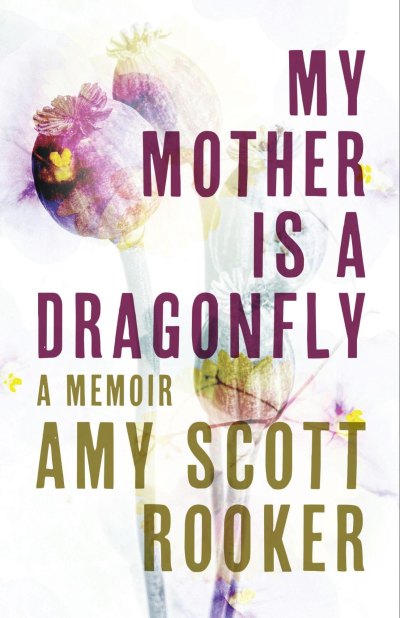
In her debut memoir, My Mother Is a Dragonfly, she traces how that disappearance began.
At fourteen, she says she experienced abuse involving a family member. She writes that, when she told her mother, she did not receive meaningful protection or support. In that moment, what Rooker absorbed was simple and devastating: she was on her own. She was left to carry not just what had happened, but the silence that followed it.
She didn’t collapse. She adapted. For Rooker, adaptation looked like splitting herself in two. One version stayed behind, hurt and waiting. The other kept going. That version learned hyper-competence—how to become someone the world rewarded.
The Cost of Living as a Split Self
Ambition became the identity she built to survive. She went on to earn a law degree from Vanderbilt University and an MBA from UCLA Anderson, moving through high-level roles in law and technology with discipline and precision.
“I built a life on top of the ache—degrees, job titles, gold stars,” she writes. “But underneath it all, I was a girl carrying something I didn’t know how to face. The shame wasn’t just a feeling. It was scaffolding. It held up entire years of my life.”
The version of Rooker that succeeded was real—but it was also a carefully constructed mask. Achievement created distance from what she felt but could not name. Control gave her a way to function, but not a way to live.
That need for control showed up in relentless perfectionism, rigid self-management and the quiet pressure to keep performing no matter how disconnected she felt. From the outside, her life looked composed, even enviable. Inside, it was organized around managing something she could feel but not yet name.
The longer she lived inside that structure, the harder it became to remember there had ever been another version of her.
When Everything Started to Crack
The turning point came after the death of Rooker’s mother.
Their relationship had stabilized in adulthood, but largely by avoiding the past. When her mother died, Rooker realized the possibility of repair died with her. The apology, acknowledgment or clarity she had never received were no longer possible—and with that, the equilibrium she had worked so hard to maintain began to give way.
Grief forced a confrontation with a story that had remained buried for decades. Rooker discovered grief doesn’t care about the life you’ve built to avoid pain. It finds the weak spots and breaks through them.
The distance she had maintained from her own history collapsed. The discipline that had carried her for years could no longer contain what it was built to hold.
The Signs She Couldn’t Ignore
In the months that followed, something else began to happen. Rooker started noticing dragonflies. Not one or two. Hundreds—and in moments that felt impossible to dismiss.
She had heard of people receiving signs from deceased loved ones. She just never believed something like that would happen to her.
But, for Rooker, the experiences were undeniable.
The dragonflies didn’t feel symbolic. They felt personal. Like something was trying to reach her.
For the first time, she stopped trying to make rational sense of everything and opened to what they might mean—about where her mom had gone and about the shape of reality itself.
The dragonflies changed how she saw the world: not as something closed and predictable, but as something she didn’t fully understand.
That curiosity eventually led her to explore alternative approaches to healing, including work that allowed her to access deeper states of consciousness.
A Different Kind of Opening
Rooker had not previously considered nontraditional paths to healing. But after her mother’s death, the strategies that had carried her for years no longer felt sufficient. She began looking for a way to reach what she had never been able to access on her own.
After conversations with her therapist, she became interested in approaches that could take her beyond talk therapy. Months later, she traveled to Costa Rica for a guided healing experience.
On that journey, she revisited the moment of her teenage trauma and heard words she had never been able to say to herself: This was not your fault. The statement didn’t feel like something she needed to believe. It landed in her body as truth.
“The experience showed me the architecture of my own pain,” she says. “Where it lived, how old it was, what it had been protecting. It didn’t fix anything for me or erase the past. But it began to loosen a shame that was never mine to carry. And for the first time, I could see the story I’d been living inside.”
She is careful not to frame therapeutic alternatives as a cure-all, but as a catalyst—something that made it possible to access self-compassion she had long kept at a distance.
“Real healing isn’t a six-hour experience that rewrites the story of your life,” Rooker says. “It’s the quiet, repetitive labor of going to the source of the pain and not turning away. Of integration. Of learning to hold pain in one hand and love in the other.”
What followed was slower, more deliberate work. A sustained process of meditation, nervous system repair and self-inquiry—peeling back the layers that had shaped her life.

What She Found When She Stopped Running
For most of her life, Amy Scott Rooker felt like she was running from pain. What she came to understand was something else.
“The pain wasn’t chasing me,” she says. “It was carrying something I had left behind.”
Healing meant turning toward it. Toward the girl she had split off from years earlier—the one who had been waiting patiently to be seen.
That shift became the foundation of her memoir, My Mother Is a Dragonfly.
For years, she believed the trauma had taken something from her she could never get back. What she eventually saw was something else: it had also become the doorway back to herself.
Not by fixing herself or becoming someone new. But by facing what she had spent years trying to outrun—and choosing to stay.
The parts she had exiled were not what broke her. They were what made her whole.
For readers who recognize themselves in that pattern—the quiet sense of living a life that doesn’t quite fit—the book offers another way of seeing it. What feels like breaking down may, in fact, be a breaking open. Not something to fix. A return to who you’ve always been.