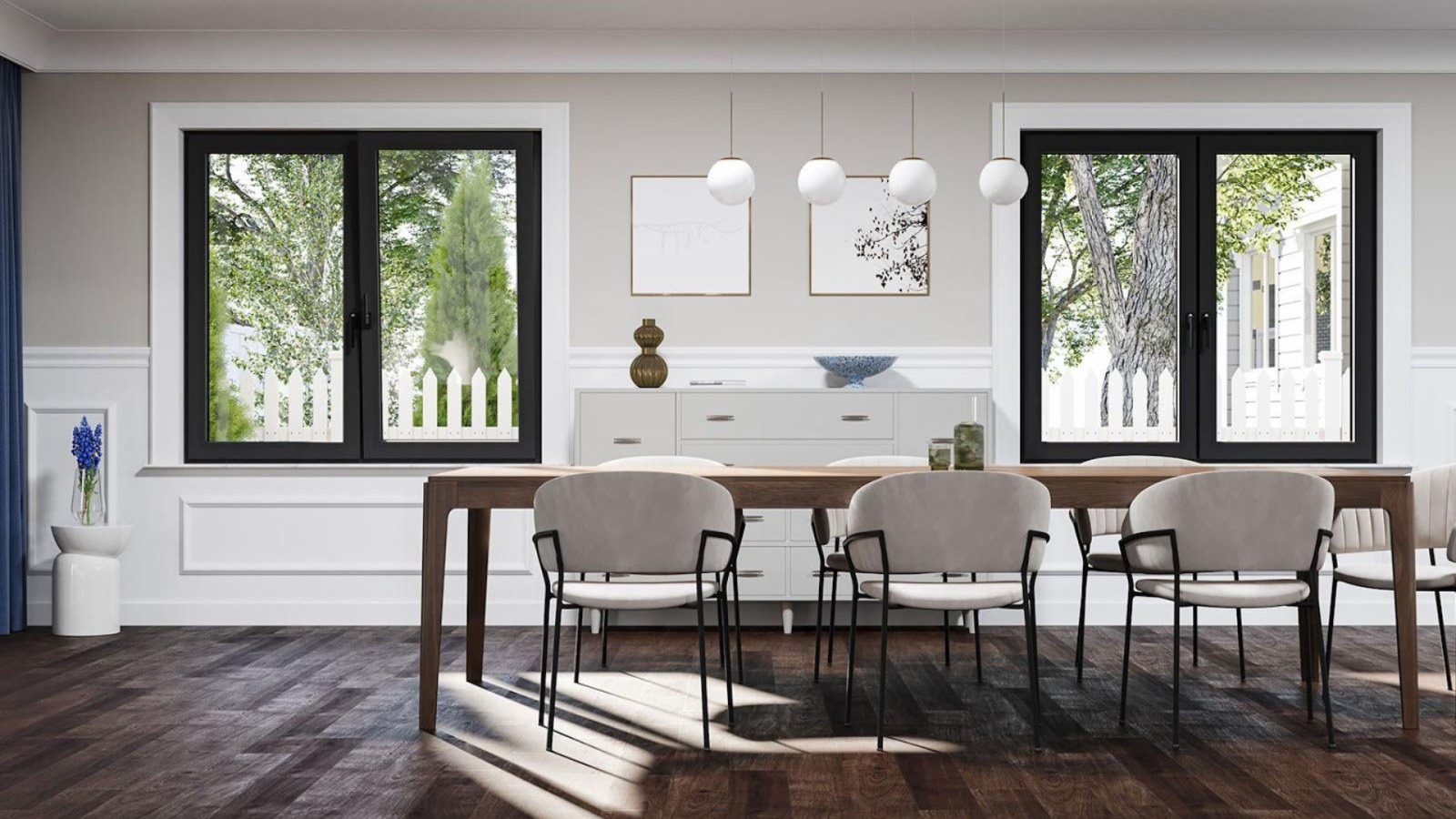
Integrating European Window Standards Into American Architectural Projects
American architects increasingly specify European windows for high-performance projects. The appeal is straightforward: better thermal performance, sophisticated hardware and in many cases, lower cost than comparable domestic premium products. But the integration process requires navigating two fundamentally different rating systems, understanding installation method differences and managing code compliance challenges that most builders haven’t encountered.
This isn’t about whether European windows are “better”—it’s about understanding when they make sense for your project and what you’re actually committing to when you specify them.
The Testing Standards Actually Differ
The claim that “European windows perform better” usually misses a critical detail: performance numbers aren’t directly comparable across testing standards. A European window with a U-value of 0.80 W/m²K doesn’t automatically outperform an American window rated at U-factor 0.30.
Here’s why: European ISO standards and American NFRC standards use different boundary conditions, algorithms and test methodologies. Research from RDH Building Science shows that the same window can show U-values varying by up to 25% depending on which standard is used for testing.
Key differences in testing protocols:
ISO standards (Europe) use 0°C exterior temperature for baseline testing. NFRC standards use -18°C (-0.4°F), which better represents actual winter conditions in cold climates. This temperature difference alone affects how gas-filled IGUs perform—argon and krypton work differently at various temperatures.
European testing optimizes for larger gas gaps between panes (typically 16-20mm). American testing reflects smaller gaps (12-14mm). This means European windows often achieve their best performance with configurations that wouldn’t be tested the same way under NFRC protocols.
Solar heat gain calculations differ less dramatically but still aren’t identical. ISO typically reports center-of-glass g-values, while NFRC reports whole-window SHGC. You’re comparing different measurements of different areas.
What this means practically: When a European manufacturer claims U-value 0.18, and an American manufacturer claims U-factor 0.22, you can’t simply declare the European product superior. They might perform identically in actual use—or the relationship might reverse depending on your climate.
NFRC Certification: Required or Not?
This causes genuine confusion. Many jurisdictions require NFRC labeling on windows. Some European manufacturers have obtained NFRC certification (e.g., OKNOPLAST). Many haven’t.
The reality varies by location. Some building departments accept European certifications with converted values and engineering letters. Others strictly require NFRC labels.
The risk: you order expensive imported windows, then discover your local inspector won’t approve them. This delays your project and forces expensive solutions—rush NFRC testing, engineer letters or replacing the windows entirely.
Verification process before ordering:
Contact your local building department early. Don’t rely on what worked in another jurisdiction. Ask specifically: “Can I use windows certified to European EN standards but without NFRC labels?” Get the answer in writing.
If NFRC certification is required, confirm your European manufacturer has it. Not all product lines from certified manufacturers carry certification—they may have tested specific models but not the exact configuration you need.
Budget for engineering letters and third-party testing reports if needed. Some jurisdictions accept these alternatives. Expect to spend $500-$1,500 per project for this documentation.
Installation Method Differences
European windows install differently than American windows. This isn’t complicated, but it requires installer familiarity with the method.
American windows typically use nailing fins (flanges) that attach to the exterior of the rough opening. The window sits in the opening, the fin nails to the sheathing then gets covered by siding and flashed. This creates a thermal bridge at the perimeter but is fast and familiar to every American framing crew.
European windows mount with brackets or anchors to the interior of the rough opening. The frame sits within the rough opening with continuous insulation wrapping around it. This eliminates thermal bridging and improves overall wall assembly performance.
Neither method is inherently better—they’re optimized for different construction approaches. European buildings use continuous exterior insulation more consistently. American construction varies widely, making the nailing fin method more adaptable to different wall assemblies.
Installation challenges in American construction:
Rough openings must be sized correctly for European mounting method. The window frame sits further into the opening, which affects interior and exterior trim details. Work this out in drawings before ordering windows.
Flashing and weatherproofing follow different logic. European installation relies on the frame’s integral seals and proper mounting. American builders accustomed to aggressive flashing and sealant application need to understand the European approach doesn’t require (or want) the same treatment.
Installation crews need specific training. This isn’t complicated—a competent installer learns the method quickly—but the first installation shouldn’t be your project. Use installers who have worked with European windows previously, or budget time and money for training.
Tilt-Turn Hardware: Functional Advantages and Practical Challenges
The tilt-turn mechanism is standard in Europe and increasingly requested in American projects. The functionality is genuinely useful: tilt the window inward from the top for secure ventilation, or turn it fully inward for complete opening and easy cleaning from inside.
Multi-point locking provides better security than typical American single-point locks. The window engages at 3-7 points around the frame perimeter, creating better seals and making forced entry significantly more difficult.
Real advantages in specific applications:
Upper story windows that are difficult to clean from the outside. The inward opening lets you clean exterior glass from inside the building.
Urban settings where exterior window washing is complicated or expensive. You eliminate ongoing maintenance costs.
Rooms where furniture placement makes standard casement or double-hung operation awkward. Tilt-turn hardware offers more flexibility.
Limitations to consider:
Interior space requirements. The window swings into the room, requiring clear space. This affects furniture placement, curtain installation and room layout.
User familiarity. American homeowners don’t instinctively understand tilt-turn operation. Some never use the tilt function, effectively paying for functionality they don’t need.
Window treatment complications. Standard blinds and curtains don’t work well with inward-opening windows. You need specialized treatments that accommodate the motion or alternatives like exterior shutters.

Performance Specifications That Actually Matter
Setting aside testing methodology differences, European windows excel at specific performance characteristics that matter for high-performance buildings.
Frame construction:
European PVC profiles often incorporate 5–7 internal chambers, whereas many U.S. vinyl profiles use fewer chambers, depending on product tier and performance targets. More chambers mean better thermal performance through the frame itself, not just the glass.
Steel reinforcement is commonly integrated into European frames, while in the U.S., it is more frequently specified based on performance requirements. This maintains structural integrity with larger glass sizes over decades of operation.
Frame depths typically run 70-90mm (2.75-3.5 inches) compared to American 2.5-3 inch standard frames. The extra depth accommodates better insulation and more sophisticated hardware.
Glazing systems:
Triple-pane is standard in mid-range European windows. In the U.S., this feature is often positioned as an optional upgrade rather than a baseline specification.
European manufacturers more frequently specify krypton gas in high-performance glazing, while argon remains the most common gas fill in U.S. residential windows.
Warm-edge spacers are widely adopted in European product lines, while aluminum spacers remain common in entry-level U.S. window offerings.
Actual performance numbers:
Quality European windows achieve U-values of 0.80-0.95 W/m²K (U-factor 0.14-0.17) in standard configurations. Passive House certified models reach 0.60-0.75 W/m²K (U-factor 0.11-0.13).
Comparable American premium windows typically achieve a U-factor of 0.20-0.25. Passive House certified American windows reach U-factor 0.15-0.18.
Is the difference significant? In passive house projects or extreme cold climates, yes. In standard construction meeting current energy codes, the gap narrows considerably.
Cost Reality: Imports vs. Domestic Premium
European windows imported directly from manufacturers like those in Poland cost roughly 50% less than comparable American premium windows. A 60″ x 80″ aluminum tilt-turn window that costs $2,000+ from American manufacturers runs $900-1,200 imported from Europe.
These aren’t cheap windows competing against mid-grade products. They’re competing against top-tier domestic offerings.
Cost factors to include:
Shipping adds roughly $200-400 per window, depending on volume and destination. Container shipping is most economical—ordering a few windows becomes expensive per unit.
Lead times run 8-12 weeks from order to delivery at port. Factor in customs clearance and delivery to the site. This is longer than a typical American window order but manageable with planning.
Installation costs are similar to American windows if you have experienced installers. Expect to pay $75-250 per window for professional installation.
NFRC certification and engineering support might add project costs if your manufacturer doesn’t already have certifications for your market.
When the economics work:
New construction or major renovations, where you can plan around lead times. The cost savings compound across multiple windows.
High-performance projects (passive house, net-zero) where you need the performance European windows deliver anyway. You’re comparing against American products in the same performance tier.
Projects where the tilt-turn functionality or European aesthetics add design value. The windows become a feature, not just a component.
When they probably don’t:
Single window replacements or small projects. Import logistics don’t scale down well.
Fast-track projects. Lead times don’t accommodate compressed schedules.
Projects in jurisdictions with strict NFRC requirements where your manufacturer lacks certification. The hassle outweighs the savings.
Passive House Projects: Where European Windows Dominate
For passive house certification, window selection becomes critical. PHIUS (Passive House Institute US) requires modelled U-values below 0.17 Btu/hr·ft²·°F for most US climate zones. PHI (Passive House Institute in Germany) standards are similarly stringent.
Meeting these requirements with American windows is possible but challenging. Passive House certification is more prevalent among European manufacturers, reflecting longstanding market demand, while adoption in the U.S. remains more selective and project-driven.
Passive house window requirements:
U-values below 0.80 W/m²K (0.14 U-factor) for window units. Installed values, including thermal bridge effects, must be even better.
High solar heat gain in some climates, low SHGC in others. Passive house design is climate-specific—you need windows optimized for your location.
Airtightness sufficient to achieve whole-building 0.6 ACH@50Pa. Windows are major air leakage points if not properly specified and installed.
Manufacturers with PHIUS certification:
OKNOPLAST offers several PVC systems certified for various US climate zones, achieving U-factors as low as 0.13.
Zola provides both European-imported and American-manufactured options with passive house certification.
Several Polish manufacturers have products that meet passive house criteria, though not all have US certification.
Making the Integration Work
Successfully specifying European windows requires addressing integration challenges systematically.
Early in the design phase:
Verify local code acceptance. Get written confirmation from the building department regarding European certifications or NFRC requirements.
Coordinate rough opening dimensions with your window supplier. European mounting methods require different opening sizes than nailing fin installations.
Detail thermal bridge mitigation at window perimeters. Show a continuous insulation strategy and how windows integrate with the air barrier.
During specification:
Request NFRC values if available, ISO values if not and engineering support documentation for code approval. Don’t assume European certifications will transfer automatically.
Specify installation method and coordinate with contractors. Make sure they understand this isn’t a standard American window installation.
Plan a window treatment strategy if specifying tilt-turn windows. Interior designers need to know about the inward operation early.
During construction:
Confirm installer experience with European mounting methods before installation begins. The first window installation should not be a learning experience.
Verify proper flashing and weatherproofing following manufacturer specifications, not standard American practices. Over-sealing can cause problems.
Test operation thoroughly after installation. Tilt-turn hardware should operate smoothly—if it doesn’t, something is wrong with the installation.
What Actually Matters
European window standards aren’t better or worse than American standards—they evolved to serve different construction practices and performance expectations. Direct performance comparisons require understanding testing methodology differences.
European windows make sense for specific applications: high-performance buildings requiring exceptional U-values, projects where tilt-turn functionality adds value and situations where import economics work favorably. They don’t make sense everywhere.
Success requires proper planning, code verification, experienced installation and realistic expectations about what you’re getting. Work with manufacturers like OKNOPLAST, who understand both European engineering and American market requirements. They provide the technical support and documentation needed for smooth integration.
The European window market offers quality options at competitive prices. But “competitive prices” assumes you’re comparing against premium American products with similar specifications. Expecting European luxury performance at American economy pricing sets projects up for disappointment.
Understand what you’re specifying, plan the integration carefully and European windows can deliver exceptional performance in American projects.