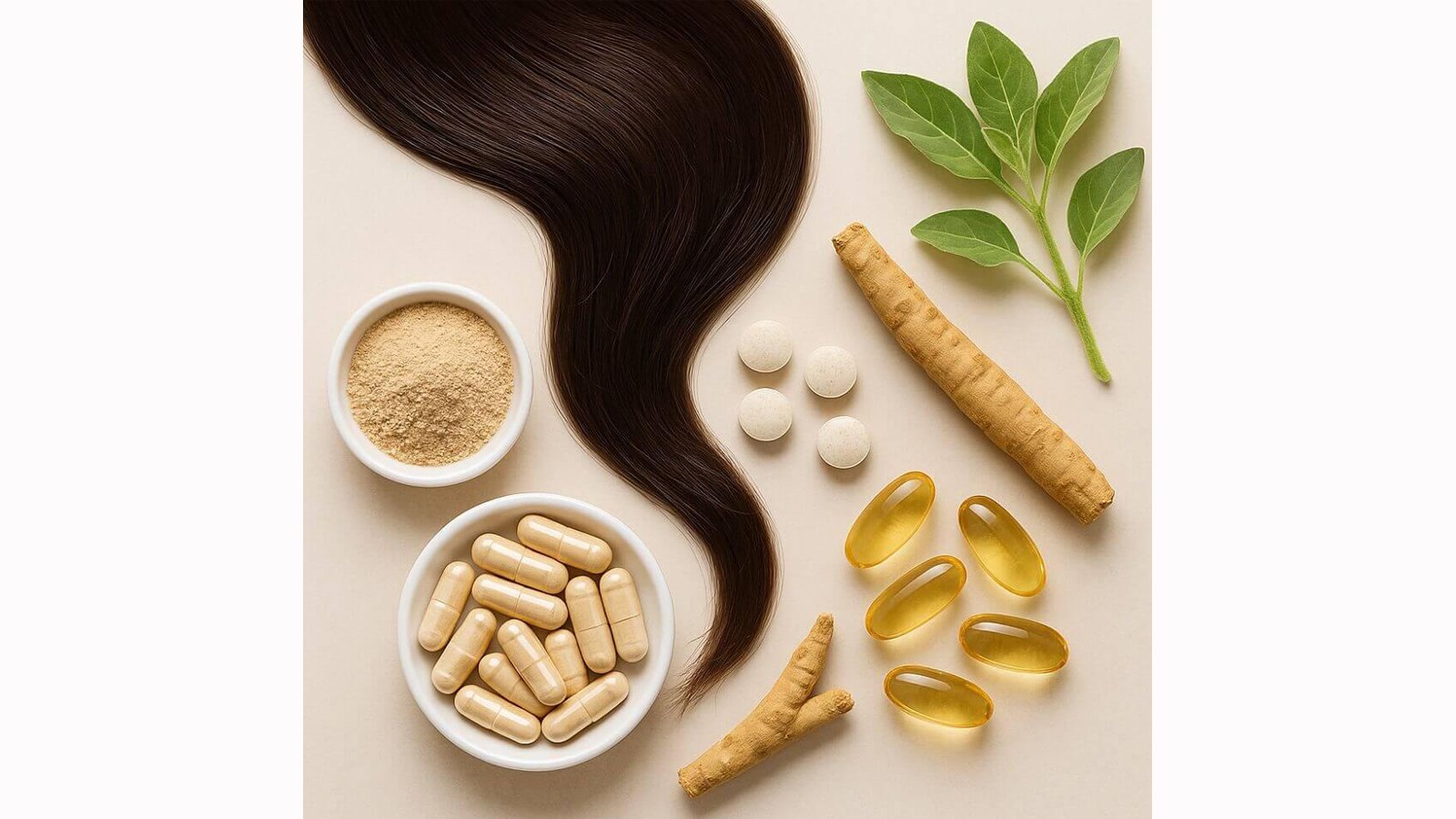
Haircare From Within: The Botanical Blend Behind a Daily Hair Vitamin
Hair is an understated yet important part of an individual’s appearance. Far more than just a series of follicles that grow upon your scalp, hair serves both critical health functions and aesthetic ones. Your face is one of the first things people notice about you, and everything from your hair’s style to its thickness helps frame it. Thus, hair can help make a good first impression.
As a result, haircare has become increasingly important in recent years. Much of this has been further prompted by the popularity of social media platforms and digital devices, which have contributed to average consumers being far more aware of their own physical appearance. In decades past, the average person might see their own reflection a handful of times a day. Today, the average person sees themselves, either through digital pictures, reflections or their own device’s interface, dozens of times a day. This has resulted in the boom in popularity of cosmetic services, and haircare serves as an extension of that.
While the topic of haircare usually brings to mind external products, such as shampoos, conditioners, or scalp treatments, a greater degree of attention is now being paid to the internal side of things. Interest in nutritional supplements has added another dimension to the conversation: what you consume in your daily routine. Hair vitamins combine nutrients, with some formulas sporting botanical extracts, to support hair health from within.
A look inside the botanical blend
Plant-derived doesn’t automatically mean clinically effective, and a long ingredient list doesn’t prove a supplement will improve hair growth. Looking closely at the formulation, the evidence and why you’re taking a supplement makes for a more useful starting point.
The ingredient list for The Root Co. Hair Vitamin includes four botanical extracts: acai fruit, green coffee bean, pau d’arco bark and olive leaf. The company describes the product as a biotin-free, vegetarian daily supplement, with a suggested serving of two capsules taken with food, one in the morning and one in the evening.
What the plant extracts bring to the formula
Acai fruit contains anthocyanins, a group of plant pigments with antioxidant properties. Green coffee bean extract contains chlorogenic acids, naturally occurring compounds studied for several biological effects. Olive leaf contains oleuropein, while pau d’arco is a bark-derived botanical used in various herbal preparations.
This showcases why there’s been so much scientific interest in the ingredients, but it is worth remembering that this interest is still in its exploratory phases. There is no guarantee that consuming each extract produces a particular hair-growth outcome. Rather, these things have proven to be subjective, with different ingredients reacting differently to various users. Evidence about a plant compound’s activity in laboratory research is not the same as clinical evidence that an oral supplement can improve hair density in people.
Root’s product information assigns roles to the botanical ingredients within its broader formulation, including antioxidant support and pathways associated with scalp health. However, those explanations serve as the company’s formulation rationale, not independent proof of every proposed mechanism.
Why vitamins and minerals matter too
The formula is not botanical-only. It also includes zinc, vitamin D3, magnesium and vitamin B5 alongside the plant extracts, adding a nutritional component. While these nutrients do have verifiable and well-established functions within the body, the question of whether or not they will help an individual’s hair depends on that individual’s unique nutritional makeup. For example, if a user has a deficiency, that can cause hair changes. Getting an influx of the kind of nutrient that you have a deficiency of could potentially help with haircare, but it does not guarantee automatic growth.
That distinction is important when evaluating supplements. A formula may contain nutrients associated with normal bodily functions without necessarily showing that taking the product will improve hair growth for everyone. Anyone concerned about thinning or shedding may benefit from discussing the possible causes with a healthcare professional, particularly if the change is sudden, persistent, or accompanied by scalp symptoms.
Hair health involves more than supplements
It’s also important to remember that hair health needs to consist of a comprehensive regimen. You can’t simply take supplements and put all of the responsibility on their shoulders; you need to ensure that you are caring for your hair across multiple fronts. Styling habits also affect the hair shaft, especially when you use heat tools frequently or at high temperatures.
Preventing heat damage is important as heat exposure can contribute to dryness, breakage, and changes to the hair’s structure. Gentle handling, sensible heat settings and avoiding unnecessary styling damage can address a different concern from nutritional supplementation. A supplement and a careful styling routine are not substitutes for one another; each relates to a different aspect of hair care.
What does the research actually show?
Root reports that it studied its finished formula over nine months in 38 adults, with hair measurements taken using trichoscopy. The company publishes results from that study on its website.
When evaluating these results, it may be useful to distinguish the company’s reported findings from an independently replicated conclusion. Study design, participant numbers, comparison groups, measurement methods, and publication details all affect how confidently you can interpret the results. Outcomes reported for a particular group should not be treated as a guarantee for an individual consumer.
Look at the bigger picture of hair changes
Hair loss can have many causes, including hormonal shifts, genetics, stress, illness, medication use and nutritional deficiencies. The right response depends on what is driving the change, so supplements shouldn’t automatically be the first or only step.
Hair loss in women has become an increasingly prevalent issue in recent years, with several contributing factors and approaches to consider. If you notice sudden shedding, patchy loss or persistent thinning, professional assessment can help identify whether an underlying condition or deficiency needs attention.
In addition to this, it is also sensible to review supplements with a healthcare professional or pharmacist if you take medication, have a medical condition or are pregnant or breastfeeding. More is not always better, and combining multiple products can lead to unnecessary nutrient intake.
Making an informed choice
For many, the appeal of a botanical hair vitamin lies in its combination of plant extracts and familiar nutrients within a daily format. Root’s formulation includes acai, green coffee bean, pau d’arco, olive leaf, zinc, vitamin D3, magnesium, and vitamin B5. The practical next step is to look beyond the botanical story. Check the ingredients, serving directions, safety information, and available research. Consider whether supplementation fits your circumstances, rather than assuming every hair concern needs another product.
Haircare is about far more than externally applying products. These new supplement-based products offer a viable way for users to explore other kinds of haircare solutions, tackling the problem at its roots. Though the potency and effectiveness of such products ultimately depend on understanding what a formula contains and what the evidence can reasonably support, a thoughtful decision begins with the ingredients and the person taking them, not simply the promise on the label.
These statements have not been evaluated by the Food and Drug Administration. This product is not intended to diagnose, treat, cure or prevent any disease.