The Checkup Is Broken. How Neurocast Is Fixing It
Most people only think about their health during two moments: when something goes wrong, or when they have a checkup on the calendar. That model has shaped modern healthcare for decades. The system waits for symptoms to flare, for problems to show up on a scan, or for a patient to describe what’s been happening in the gaps between appointments. But for people living with chronic conditions, especially neurological ones, those gaps are often where the most meaningful changes occur.
The rise of the wellness industry has trained millions of people to track their steps, heart rate, and sleep cycles. According to YouGov, two-thirds of Americans now monitor at least one health metric with a smartphone or wearable. Devices like Fitbit, Apple Watch, and Oura Ring have made personal health data a daily habit. However, the brain remains the most under-monitored part of the body. While step counts and sleep patterns are easy to monitor, there is still no simple way to track cognitive function or neurological changes in daily life.
That blind spot comes with serious consequences. Conditions like multiple sclerosis, Parkinson’s, and Alzheimer’s often progress in subtle ways that go unnoticed between check-ins. A patient may experience slower thinking, minor tremors, or early fatigue long before those changes are caught by a doctor or reflected in an MRI. In MS specifically, researchers have found that this so-called “silent progression” is common, and that many patients deteriorate between appointments without any objective measurements to alert their care team.
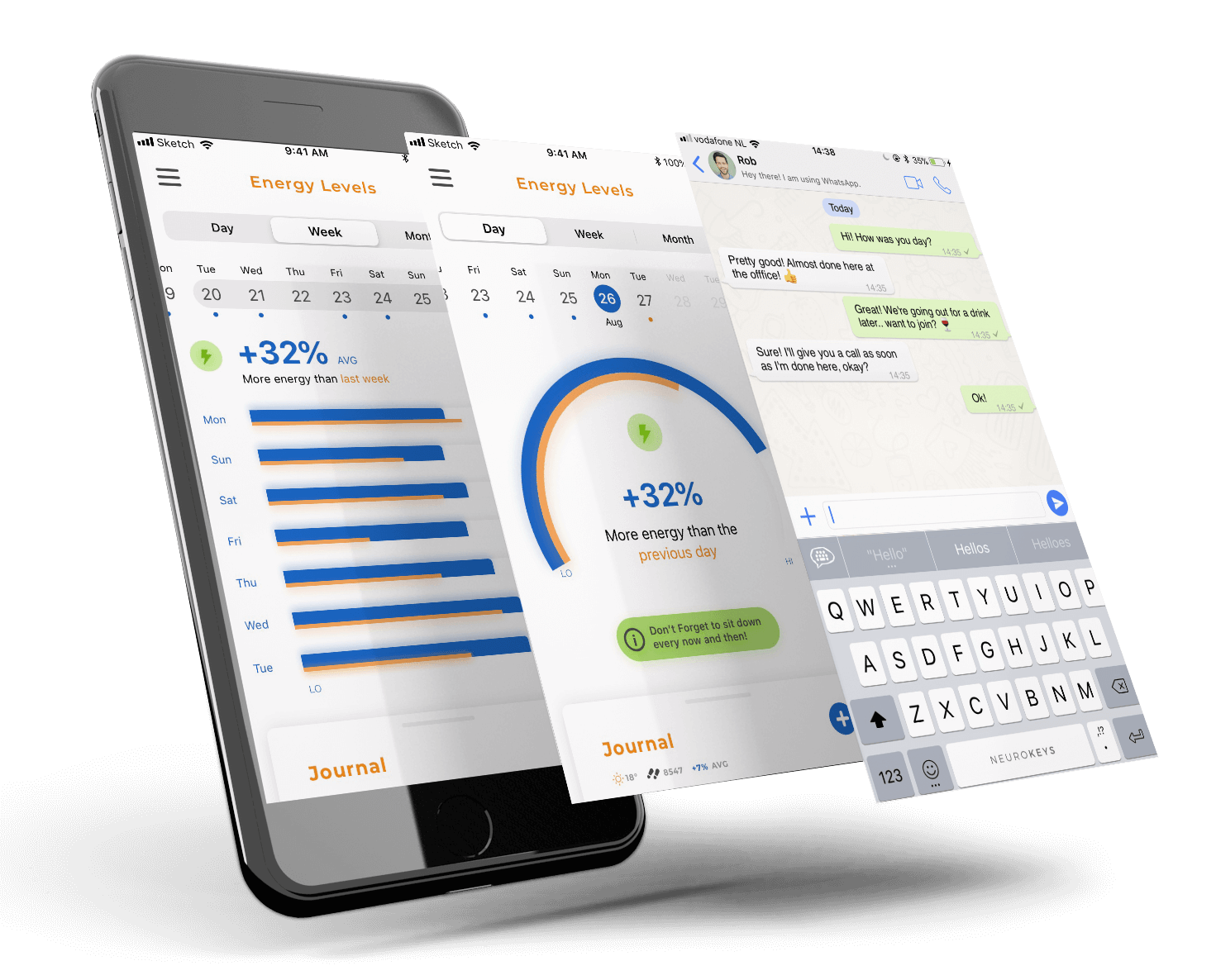
This is where Neurocast comes in. The Amsterdam-based company has developed a passive monitoring platform that tracks neurological health through something people already use all day: their phone. Instead of requiring a wearable device or regular self-assessments, Neurocast uses a smartphone keyboard called Neurokeys. It runs in the background, analyzing how a user types, taps, and scrolls. The system is designed to translate that data into clinically relevant signals that reflect cognitive speed and motor function.
“We designed Neurocast to be invisible by design,” says Levie Hofstee, founder and CEO. “Most people don’t want another device to wear or more surveys to fill out. We wanted to create something that works quietly in the background, without changing behavior.”
That passive, patient-first approach is now being validated across a growing number of real-world healthcare settings. Neurocast is actively working with academic medical centers and clinical partners to refine its models at scale. The goal is to explore how passive neurological monitoring can be integrated into routine care. These deployments are designed to help clinicians capture subtle patterns of change between visits and provide insights that might otherwise go unnoticed until symptoms become more severe.
The use cases extend beyond hospitals. Neurocast is also signing on strategic partners outside the clinical setting. These include large health insurers focused on supporting aging-in-place, as well as employers looking for tools that promote mental resilience and cognitive performance in the workforce. Together, these partnerships reflect a broader shift toward integrating brain health into population-wide health strategies. Continuous monitoring can support early interventions, healthier aging, and lower care costs over time.
Crucially, Neurocast does all of this while respecting patient privacy. According to the company, the platform is ISO 27001 certified and fully GDPR compliant, and the system collects how a person types, not what they type. This level of security and transparency has helped Neurocast earn trust among healthcare providers and regulatory bodies.
For Hofstee, the vision extends beyond MS. Neurocast is already working on use cases for Alzheimer’s, ADHD, and depression. The goal is to build a new kind of health infrastructure, one that allows people to monitor brain health with the same ease and frequency as tracking their steps or heart rate.
“The smartphone is already the most widely used health device in the world,” Hofstee says. “It is always with us. Our goal is to make it quietly helpful for the most complex part of our body.”
As more people embrace personalized health and real-time data, the idea of waiting for an annual checkup feels increasingly outdated. Neurocast is not trying to replace doctors or diagnostics. Instead, it offers a bridge between appointments, a safety net that listens for changes people might not even notice in themselves. In a system still built around intermittent check-ins, that kind of continuous care is not just a convenience. It could be a lifeline.
This article is for informational purposes only and does not substitute for professional medical advice. If you are seeking medical advice, diagnosis or treatment, please consult a medical professional or healthcare provider.
Life & Style partners with external contributors. All contributor content is reviewed by the Life & Style editorial staff.