Go on a Pastry Tour of Italy with Francesco Realmuto: How Realmuto Brings Regional Italian Classics to Life in the Heart of NYC
Go on a Pastry Tour of Italy with Francesco Realmuto: How Realmuto Brings Regional Italian Classics to Life in the Heart of NYC
In most cities, pastry is defined by sugar and spectacle. Swirls of buttercream, neon glazes, sky-high stacks. However in Italy, dessert is something quieter — a conversation between region and ritual, between memory and restraint. There, a slice of torta della nonna is as rooted in place as a dialect; a rum-soaked babà tells a different story in Naples than a ricotta-filled cannolo does in Palermo. Each confection is a postcard from somewhere specific, and nowhere is that idea more faithfully expressed in Manhattan than at Realmuto.
Tucked into the city’s ever-evolving Italian food landscape, Realmuto stands apart. Founded by longtime restaurateur Francesco Realmuto, the café focuses on alta pasticceria italiana — not a stylized riff, but the real thing. The pastries are drawn from every corner of the country, presented with reverence and balance, and anchored by ingredients either imported or prepared to regional standards. At a glance, it might look like a café. In practice, it’s a culinary itinerary.
From North to South: A Regional Pastry Tour
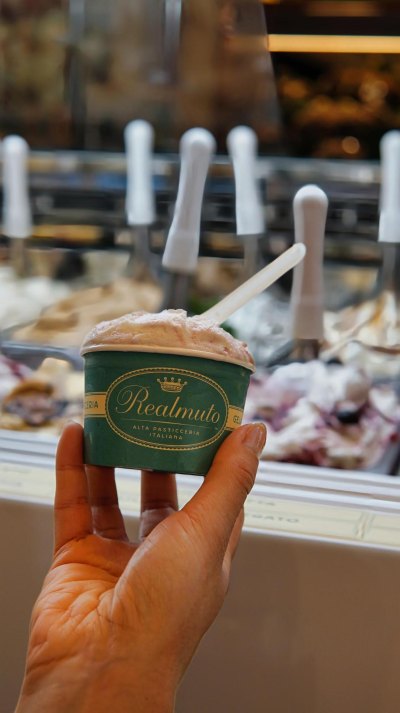
The menu at Realmuto reads like a gentle descent through Italy’s diverse geography. From the alpine north to the volcanic south, each pastry offers its own history, structure, and personality.
Start with the Millefoglie — a classic from the north, composed of layered puff pastry and Chantilly cream. Crisp, balanced, and free of excess sugar, it sets the tone for Realmuto’s approach: precision over indulgence.
Traveling slightly south, the Torta della Nonna — a Tuscan grandmother’s pie made with pine nuts and custard — delivers a nostalgic middle note. Its simplicity is deceptive; behind it lies restraint, memory, and technique.
Then comes the Babà al Rhum, unmistakably Neapolitan. Soaked in rum syrup and lightly golden, it’s less of a dessert and more of a ritual — a holdover from Naples’ bar culture, where the babà lives alongside espresso, not at the end of a meal.
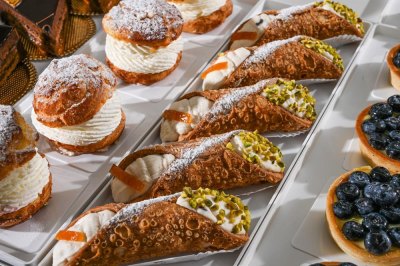
Finally, one arrives in Sicily, where Realmuto leans in with unmistakable pride. The Cannolo Siciliano features a crisp, delicate shell and is filled only upon order — avoiding the sogginess that plagues lesser versions. Nearby, the Cassatina Siciliana, a domed sponge cake covered in almond paste and dotted with candied fruit, adds color and complexity. Even the Biancomangiare, Sicily’s almond milk panna cotta, finds a place on the menu — a nod to Arabic influence and island restraint.
Each item is carefully labeled and served in a way that respects its origin, not overwrites it.
The Café Experience: Beyond the Pastry Case
While the pastries are the marquee, Realmuto’s environment is built for pause, not rush. Guests can pair their selections with a cappuccino, macchiato, or shakerato from the café’s full espresso bar, or opt for an Aperol Spritz, Negroni, or glass of Franciacorta to shift into aperitivo hour. For those looking to linger, savory options like tramezzini (tuna, egg salad, or vegetables) and focacce (with mortadella or stracchino and arugula) round out the experience.
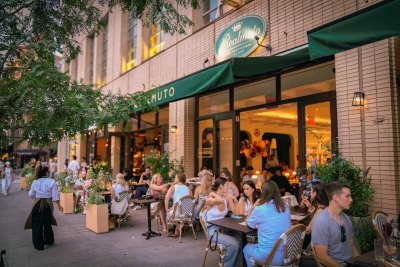
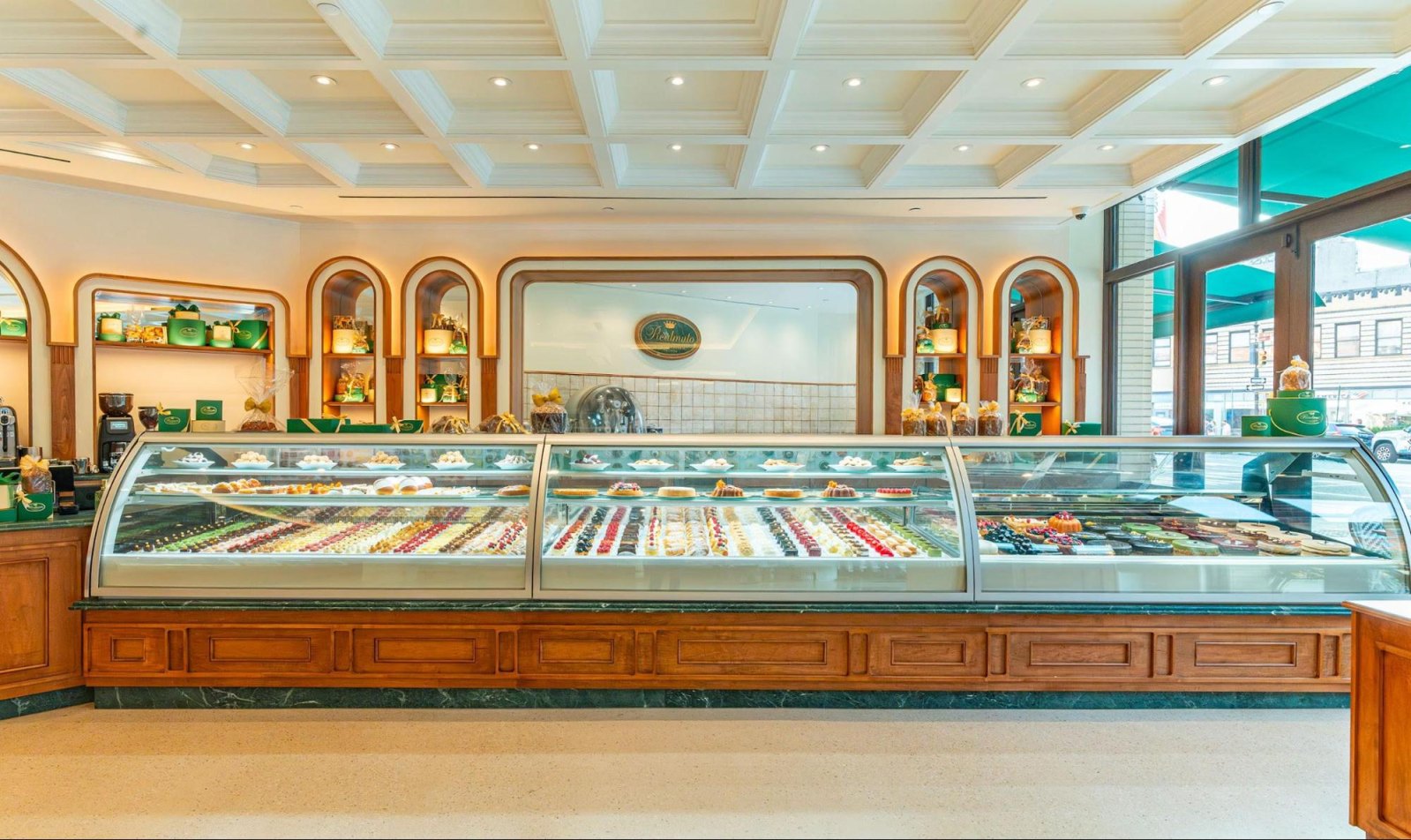
The space is clean and understated, more Milan than Mulberry Street. It’s not performative — it’s intentional. There’s no music competing with conversation, no trend-chasing decor. Just marble counters, restrained light, and the quiet hum of a place that understands its purpose.
Realmuto’s Place in the Pastry Landscape
In a city where Italian dessert often means tiramisu in a mason jar or cannoli dipped in chocolate chips, Realmuto restores context. These pastries aren’t just sweets — they’re cultural artifacts, carried across time and geography with discipline and care.
For Francesco Realmuto, who launched the café after two decades of building hospitality concepts across New York, this project is personal. It’s not nostalgic for the sake of it. It’s restorative. A way to offer New Yorkers a taste of Italy that doesn’t need translation — just attention.

Go on a Pastry Tour of Italy with Francesco Realmuto: How Realmuto Brings Regional Italian Classics to Life in the Heart of NYC
In most cities, pastry is defined by sugar and spectacle. Swirls of buttercream, neon glazes, sky-high stacks. However in Italy, dessert is something quieter — a conversation between region and ritual, between memory and restraint. There, a slice of torta della nonna is as rooted in place as a dialect; a rum-soaked babà tells a different story in Naples than a ricotta-filled cannolo does in Palermo. Each confection is a postcard from somewhere specific, and nowhere is that idea more faithfully expressed in Manhattan than at Realmuto.
Tucked into the city’s ever-evolving Italian food landscape, Realmuto stands apart. Founded by longtime restaurateur Francesco Realmuto, the café focuses on alta pasticceria italiana — not a stylized riff, but the real thing. The pastries are drawn from every corner of the country, presented with reverence and balance, and anchored by ingredients either imported or prepared to regional standards. At a glance, it might look like a café. In practice, it’s a culinary itinerary.
From North to South: A Regional Pastry Tour
The menu at Realmuto reads like a gentle descent through Italy’s diverse geography. From the alpine north to the volcanic south, each pastry offers its own history, structure, and personality.
Start with the Millefoglie — a classic from the north, composed of layered puff pastry and Chantilly cream. Crisp, balanced, and free of excess sugar, it sets the tone for Realmuto’s approach: precision over indulgence.
Traveling slightly south, the Torta della Nonna — a Tuscan grandmother’s pie made with pine nuts and custard — delivers a nostalgic middle note. Its simplicity is deceptive; behind it lies restraint, memory, and technique.
Then comes the Babà al Rhum, unmistakably Neapolitan. Soaked in rum syrup and lightly golden, it’s less of a dessert and more of a ritual — a holdover from Naples’ bar culture, where the babà lives alongside espresso, not at the end of a meal.
Finally, one arrives in Sicily, where Realmuto leans in with unmistakable pride. The Cannolo Siciliano features a crisp, delicate shell and is filled only upon order — avoiding the sogginess that plagues lesser versions. Nearby, the Cassatina Siciliana, a domed sponge cake covered in almond paste and dotted with candied fruit, adds color and complexity. Even the Biancomangiare, Sicily’s almond milk panna cotta, finds a place on the menu — a nod to Arabic influence and island restraint.
Each item is carefully labeled and served in a way that respects its origin, not overwrites it.
The Café Experience: Beyond the Pastry Case
While the pastries are the marquee, Realmuto’s environment is built for pause, not rush. Guests can pair their selections with a cappuccino, macchiato, or shakerato from the café’s full espresso bar, or opt for an Aperol Spritz, Negroni, or glass of Franciacorta to shift into aperitivo hour. For those looking to linger, savory options like tramezzini (tuna, egg salad, or vegetables) and focacce (with mortadella or stracchino and arugula) round out the experience.
The space is clean and understated, more Milan than Mulberry Street. It’s not performative — it’s intentional. There’s no music competing with conversation, no trend-chasing decor. Just marble counters, restrained light, and the quiet hum of a place that understands its purpose.
Realmuto’s Place in the Pastry Landscape
In a city where Italian dessert often means tiramisu in a mason jar or cannoli dipped in chocolate chips, Realmuto restores context. These pastries aren’t just sweets — they’re cultural artifacts, carried across time and geography with discipline and care.
For Francesco Realmuto, who launched the café after two decades of building hospitality concepts across New York, this project is personal. It’s not nostalgic for the sake of it. It’s restorative. A way to offer New Yorkers a taste of Italy that doesn’t need translation — just attention.
At Realmuto, dessert doesn’t follow the meal. It defines the moment.
Life & Style partners with external contributors. All contributor content is reviewed by the Life & Style editorial staff.