The Most Requested Facial Procedures Right Now (Trending Cosmetic Surgery)
Not long ago, cosmetic surgery was something people did quietly and frequently denied. Today, facial procedures are often discussed more openly than they once were, and the demand reflects it by spanning age groups, backgrounds and motivations that would have surprised the industry a decade ago.
That shift in expectations has influenced aesthetic surgery. Celebrity influencers, high-definition video, selfie culture and digitally filtered images have changed how people perceive facial balance and aging, often influencing the concerns they bring into consultation rooms. Although these influences may affect the requests patients bring to a surgeon, they do not always align with what the doctor actually sees in practice, or what genuinely serves a patient’s anatomy and long-term results. For a clinical perspective, the article centers on insights from Dr. Cohen’s practice.
Dr. Steven R. Cohen, MD, FACS, a craniofacial and plastic surgeon, founder and medical director of Faces Plus in La Jolla, San Diego and Clinical Professor of Plastic Surgery at UC San Diego, has seen this evolution firsthand. Dr. Cohen has experience in regenerative and aesthetic facial surgery. His list comes from decades of clinical practice and a patient base that spans the country. The following procedures are among those Dr. Cohen says patients are requesting most right now.
1. Deep Plane Facelift
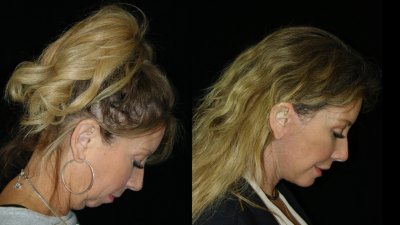
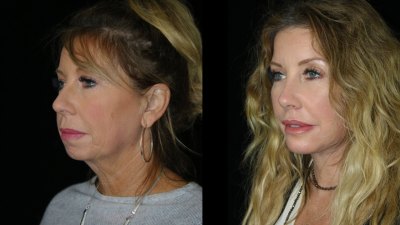
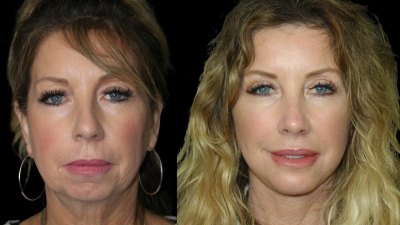
The facelift remains a common facial rejuvenation procedure, and according to Dr. Cohen, patient demand has not lessened. What has changed is the technique they are seeking.
“Patients are no longer asking to look dramatically different; they want to look refreshed, structurally balanced, and naturally youthful,” he notes. To deliver this, Dr. Cohen strongly favors the Deep Plane Facelift, a technique that repositions the deeper facial structures rather than simply tightening skin. The distinction matters. Surface-only approaches can produce the telltale pulled appearance patients fear, while a deep plane lift is designed to reposition deeper facial structures, which may help create a more natural-looking result for appropriate patients.
For Dr. Cohen, it is also the procedure he finds most meaningful. “When performed properly, it has the ability to restore harmony, confidence and vitality in a profound yet natural way,” he says. “Patients often tell me they feel like themselves again, not different, not artificial, simply restored.”
2. Blepharoplasty (Eyelid Surgery)
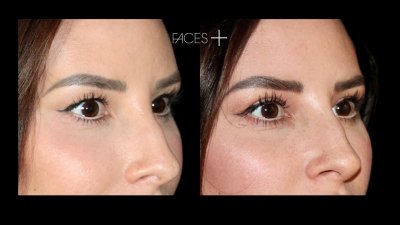
Upper and lower eyelid surgery is among the procedures Dr. Cohen says patients commonly request at Faces Plus, and the reasons are straightforward. Procedures that may involve shorter downtime can be appealing to patients seeking facial rejuvenation. Eyelid surgery remains one of the most frequently performed facial procedures, largely because the eye area is central to how fatigue and aging are perceived. Even subtle changes in eyelid shape, skin excess or under-eye volume can significantly affect overall facial expression.
Dr. Cohen takes a conservative, structural approach. “The goal is not to hollow the eyes, but to rejuvenate youthful contours while preserving identity,” he explains. Fat repositioning rather than removal is a less aggressive intervention that maintains the softness and depth that define a natural-looking eye. Patients often seek results that make them appear more alert and rested rather than noticeably different, which is a key goal in modern eyelid rejuvenation.
3. Rhinoplasty
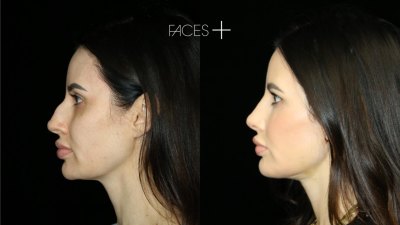
No feature defines the face quite like the nose. Its size, angle and proportion affect how everything around it is interpreted, making rhinoplasty one of the most consequential decisions a patient can make. It is also among the most culturally influenced.
Dr. Cohen offers a clinical perspective on the trend. He favors preservation and structural rhinoplasty techniques, approaches that work with a patient’s existing anatomy more than reducing or reshaping it toward an external ideal. “A nose should harmonize with the face, not dominate it,” he says. Over-resection, he notes, creates instability and often produces a result that ages poorly over time. The goal, in his view, is balance rooted in the individual, not transformation toward someone else.
4. Neck Contouring
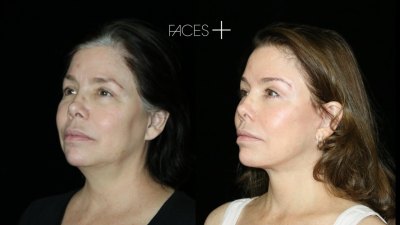
Neck and jawline work has become a more frequent consultation topic recently, according to Dr. Cohen, and he points directly to digital culture as a driver. Patients are often now noticing early jowling, loss of jawline definition or a “softening” of the neck even in their 30s and 40s.
His approach addresses the issue comprehensively. “Simply liposuctioning the neck without treating deeper anatomy often leads to incomplete or short-lived improvement,” he explains. A thorough neck contouring procedure, in his view, must address fat, muscle laxity and skin quality simultaneously to produce a result that is both clean and durable, especially if patients are to maintain these procedures from an earlier age.
5. Facial Fat Grafting
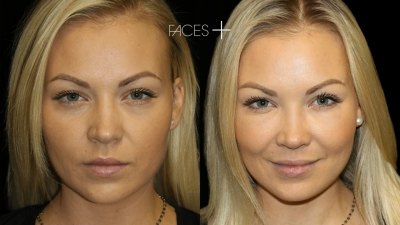
Regenerative facial fat grafting, often combined with facelift surgery but also offered as a standalone procedure, is drawing increased interest in cosmetic surgery. Patients noticing hollowing in the cheeks, temples or under-eyes, creating an aged or fatigued appearance, are increasingly turning to fat grafting as a solution that works with the body rather than adding foreign material to it.
What Dr. Cohen performs, however, is not standard fat grafting. His proprietary approach begins with a comprehensive analysis of every area of volume loss across the face, with the goal of replacing volume in targeted areas rather than applying it broadly. Using his co-invented Lipocube device to obtain different types of fat suited to different layers of the face, and his ITR² technique to refine those preparations for precise reintroduction at multiple depths, the fat is placed with consideration for the face’s natural compartments.
Beyond structural restoration, regenerative stem cells are routinely microneedled and injected into the skin, and a biologic cream made from the patient’s own cells is applied topically, supporting skin renewal. Dr. Cohen says this combination of targeted placement and regenerative techniques may contribute to continued changes in skin quality and facial appearance after the procedure.
“Aging is fundamentally a loss of support and volume, and fat grafting allows us to rejuvenate the face while maintaining softness and authenticity,” he says.
Considered together, this list reflects broader changes in patient preferences and surgical approaches. Across all five procedures, a consistent theme of subtlety emerges. For many patients and surgeons, the preferred outcomes are subtle results that preserve the individual’s natural appearance. Patients do not want surgery that announces itself. For a surgeon whose background spans craniofacial reconstruction, regenerative medicine and decades of aesthetic refinement, this philosophy represents the clinical standard built over his career.
Dr. Steven R. Cohen, MD, FACS is the Founder & Medical Director of Faces Plus in San Diego. Learn more at facesplus.com or follow on Instagram @doctorstevencohen