
A Practical Winter Guide for Supporting Your Immune System, Skin & Mood
The first cold snap can be a mixed bag. Cozy sweaters and winter walks on one hand, scratchy throats, flaky skin and restless nights on the other. Many brace for months of feeling worn down without really knowing why the cold season hits so hard.
In temperate climates, people get sick more often in winter, not because cold air directly “causes” colds, but because dry, heated indoor environments, crowding and lower vitamin D levels make it easier for respiratory viruses to survive and spread while subtly weakening immune defenses.
That is not a doomsday sentence, though. It is a reminder that the way you sleep, eat, move and care for your space still matters. This guide pulls together what is known about winter health and turns it into practical steps for your immune system, skin, mood and home.
Key Takeaways
- Winter raises the odds of illness, low mood and dry skin, but steady habits still help.
- Vaccines, regular sleep, balanced meals and modest movement are more reliable than quick fixes.
- Gentler shower routines, moisturizer and humidity help protect the skin barrier.
- Light exposure, routine and social contact support mood; professional help matters when symptoms are heavy or long-lasting.
- How you clean and ventilate your home can influence overall comfort during winter.
- A Winter Health Risk & Habit Matrix and a 7-day reset at the end of this piece can help you turn advice into a workable routine.
Why Winter Makes It Easier to Get Sick (and What You Can Actually Control)
By mid-season, it can feel as if every person on transit is coughing or sniffling. There is a reason for that.
Once temperatures drop, windows close. People share more air with other people in offices, schools, trains and crowded spaces. Heating systems dry the air AND the lining of the nose and throat, which normally trap and clear particles.
Many respiratory viruses also stay stable for longer in cool, dry air. That means the particles someone breathes or coughs out can hang in the environment instead of breaking down quickly. At the same time, shorter days and less sun affect our vitamin D levels, which play a role in immune function.
You cannot rewrite the weather, but you can influence how often you are in crowded, poorly ventilated spaces, how rested you are and how well supported your body is going into winter.
The Big Four Winter Health Pressures
Most cold season complaints fall into familiar groups:
- Infections – colds, flu, COVID-19, RSV and stomach bugs that spread at home, school or work.
- Skin changes – tight, itchy, rough or cracked skin from low humidity and hot showers.
- Mood and energy – shorter days and routine changes that leave many people flat or irritable.
- Home environment – dry air, dust, heater safety and ice-related falls.
Keeping those categories in mind makes it easier to decide where to focus your effort this year.
Build a Winter-Proof Immune Routine
Rather than chasing one “immune booster,” think about giving your body a healthy baseline.
1. Start With Vaccines and Checkups
Seasonal flu vaccines, if advised by local health authorities, are still among the strongest tools to reduce severe illness. They are not flashy, but they are well-studied. Also, checking in with your health care provider before winter is in full swing can help you adjust medications and action plans.
The idea is to go into the season prepared, not already behind.
Pre-winter health checklist:
- Ask a doctor or pharmacist about the current flu vaccine.
- Refill long-term prescriptions early.
- Review what to do if breathing, heart or blood sugar symptoms worsen.
From there, food and daily habits become the main support.
2. Think in Real Meals, Not Magic Solutions
Immune function reflects how you live most days, not what you do once in a while. A pattern of balanced meals matters more than any single “immune food.”
Go-to meals for winter:
- Vegetable-rich soups, stews and chilis.
- Lentils, beans and chickpeas.
- Citrus fruit (who doesn’t love mandarins?), berries, apples and pears.
- Whole grains like oats, barley and brown rice.
- Nuts and seeds for healthy fats and vitamin E.
If your appetite is unpredictable, you travel often or life is simply busy, supplements can sit on top of that base. They do not replace meals, but they can help cover gaps when your plate is less consistent than you would like.
Some people may have difficulty converting certain synthetic B vitamins into forms the body can readily use. Many people carry some type of MTHFR gene variation, though estimates vary, which affects how efficiently the body processes folic acid and other B vitamins. Most people don’t know their MTHFR status. This is one reason some people choose methylated vitamin forms as a cautious, convenient option.
3. Fit In A Methylated Multivitamin
For some people, a thoughtfully designed multivitamin helps fill gaps that show up during busy or stressful seasons. That is especially true in winter, when appetite patterns, daylight and activity all shift.
A methylated multivitamin uses forms of B vitamins that are already active in the body, such as methylcobalamin for B12 and L-5-methyltetrahydrofolate (L-5-MTHF) for folate. These forms don’t require the same conversion process as synthetic folic acid and cyanocobalamin. This is relevant because a large portion of the population is thought to carry some variation of the MTHFR gene that can reduce conversion efficiency. Since MTHFR testing isn’t routine and many people are unaware of their genetic status, Methylated forms offer a simplified approach, as they can be used without knowing your genetic variation status.
One example is the methylated multivitamin by Herba Health Canada. Herba Health Inc. is a Canadian family business that has focused on natural supplements since 2003. Their formula brings together bioavailable B vitamins, vitamin D3 from lichen, vitamin K2 as MK-7 and vitamin E from mixed tocopherols in an iron-free capsule. That combination is commonly associated with energy metabolism, red blood cell health, immune function and nutrient metabolism across the colder months.
Why Methylated Vitamins Matter for Most People
MTHFR is an enzyme your body uses to convert synthetic folic acid into its active form (L-5-methyltetrahydrofolate). Common genetic variations in the MTHFR gene can slow this process.
- A significant share of the population carries some form of MTHFR gene variation, based on commonly cited estimates
- 25% of the global population has the common C677T variant
- Most people don’t know their MTHFR status unless they’ve had genetic testing
Methylated B vitamins come in forms the body can readily use, which some people prefer when they’re uncertain about their MTHFR status.
Because methylated forms are the final active forms your cells use, they can be particularly valuable during winter when immune demands are higher and dietary patterns may shift. Any multivitamin should be used in conjunction with your health care provider, especially if you take medication, have a medical condition or are pregnant or breastfeeding. A short discussion can help you choose a product that fits your needs and avoid overlaps with other supplements or prescriptions.
4. Do Not Forget Winter Hydration
Many people drink less water when it is cold. Thirst signals are weaker, and hot drinks or coffee often take over.
Simple ways to stay on top of fluids:
- Keep a glass or water bottle on your desk or counter.
- Use herbal tea and a hot broth if plain water does not appeal.
- Glance at urine color now and then; pale yellow usually suggests reasonable hydration.
Hydration supports circulation, digestion and energy, and it can help you feel less sluggish, which makes movement easier to manage.
Move Your Body (Even When the Weather Is Doing Its Worst)
Exercise messages often focus on fitness goals, but in winter, the aim is more basic: keep your body from spending months in one position.
5. Create an Indoor Movement Plan You Can Live With
You do not need hour-long workouts to see benefits. Short, regular bursts of movement can help your immune system, mood and sleep.
Ideas that work well in cold months:
- Three 10-minute walks across the day, even if some are indoors.
- A short online class a few times a week, such as yoga, stretching or bodyweight training.
- Light mobility work while you watch a show.
- Standing or pacing during phone calls if your body allows it.
Think of movement as a routine part of the day, similar to brushing your teeth, not a special event that requires perfect motivation.
6. Head Outside When It Is Safe Enough
Fresh air, light and a change of scenery can shift how you feel more quickly than you might expect. On days with clear sidewalks and reasonable wind chill, a short walk outside can help regulate sleep and mood.
To keep outdoor time comfortable and safe:
- Dress in layers so you can adjust as you warm up.
- Cover ears, hands and neck; choose shoes with a good grip.
- Watch for ice, uneven surfaces and poor lighting.
- Cut outings short if you notice numbness, intense shivering or confusion.
Movement supports your immune system and sleep, but it also interacts with another winter concern: Your skin.
Guard Your Skin: Winter Beauty and Barrier Care
If you notice your hands cracking or your legs itching under tights, you are seeing the effects of cold, dry months on the skin barrier.
7. Why Skin Reacts So Strongly in Winter
Skin is a protective barrier. It keeps water in and irritants out. Winter puts pressure on both jobs.
Indoor heating dries the air, which pulls moisture from the surface of the skin. Hot showers and soaps that strip oil break down the natural lipids that help seal that moisture in. Over time, that can show up as:
- Tightness after bathing.
- Flaking on the face, scalp or body.
- Cracked knuckles, heels or lips.
- Red, itchy patches, especially in people prone to eczema.
Once the barrier is irritated, elements that were fine in other seasons — fragrance, rough fabrics, even frequent handwashing — can sting or itch.
8. A Winter Skin Routine That Respects Your Barrier
You do not need a long product list to support your skin in winter. Small shifts matter.
Helpful changes:
- Lower the water temperature in the shower and shorten the time.
- Use gentle, fragrance-free cleansers on the face and body.
- Apply moisturizer within a few minutes of getting out, while the skin is still slightly damp.
- Choose thicker creams or ointments for hands, feet and other dry spots.
- Keep hand cream near sinks and apply it after washing.
- Wear gloves outdoors and for dishwashing or cleaning that involves chemicals.
Sunscreen still belongs in your winter routine, especially on bright days or when you are around snow. UV exposure does not disappear just because you can see your breath.
If skin is severely cracked, weeping or painful, or if over-the-counter care is not helping, a conversation with a dermatologist or primary care provider can point you to stronger treatments or rule out other conditions.
Protect Your Mood, Sleep and Mental Health
Shorter days influence more than how long you spend outside; they also affect your internal clock.
9. Light, Routine and Staying Connected
As daylight shrinks, many people naturally shift their schedule later. Add more screen time, comfort food and pressure to be “on” for social events, and it is easy to feel off balance.
Habits that help:
- Keep your wake time fairly steady, even on weekends.
- Aim for some natural light within an hour of getting up, even if it is just a balcony or a short walk.
- If you notice a pattern of mood changes every winter, ask a clinician about light therapy or other supports.
- Protect at least one daily ritual that feels grounding, such as a quiet coffee, a brief stretch or a short walk.
- Plan a low-pressure connection, like a phone call or a walk with a friend, instead of relying only on big gatherings.
These habits may help provide consistent cues for your nervous system, which can ease some of the mental load of the season.
10. When Winter Blues May Be a Sign of Something More
There is a difference between feeling a little sluggish and living with seasonal affective disorder.
Signs that suggest a need for professional care include:
- Low mood most days for more than a couple of weeks.
- Loss of interest in activities you normally enjoy.
- Noticeable changes in appetite or weight.
- Oversleeping or very disrupted sleep patterns.
- Trouble focusing or getting through daily tasks.
If you recognize yourself in that list, talk to a health care provider or mental health professional. If you’re experiencing thoughts of self-harm or feeling like you don’t want to live, please consider contacting crisis services or local emergency care. These resources are available to offer immediate support.
A comfortable and safe-feeling environment may make mood management feel more achievable, which highlights the role of your home setup.
Make Your Home a Winter Health Ally (Not a Hazard)
By February, most are spending long stretches indoors. The way you heat, clean and air out your space matters more than many people realize.
11. Tame Dry Air and Indoor Irritants
Dry indoor air can irritate the eyes, nose and throat and worsen coughs. Dust, pet dander and other particles also tend to build up when windows stay closed.
Steps that can help:
- Use a humidifier and clean it regularly according to instructions.
- If a humidifier is not available, placing a bowl of water near radiators can add a little moisture.
- Dust with a damp cloth instead of a dry one so particles cling.
- Vacuum often; a HEPA filter is helpful if your vacuum offers it.
- Open windows briefly when the weather allows to bring in fresh air.
Your breathing, sleep and skin all benefit when the air in your home is less harsh.
12. Heat Safely and Sleep Warm
Heating is non-negotiable in a Canadian winter, but safety should be part of the routine.
Keep in mind:
- Keep blankets, curtains and clothing away from heaters.
- Install carbon monoxide alarms if you use gas or solid fuel and test them regularly.
- Have furnaces, fireplaces and other fuel-burning appliances serviced as recommended.
- Use space heaters according to instructions and be careful about placement in bedrooms.
- Rely on layers of bedding and warm sleepwear rather than one extreme heat source.
A bedroom that’s warm (but not overheated) and free of distractions or discomforts may help with better sleep and ease.
13. Manage Winter Bugs at Home
Viruses travel quickly through households. You may not be able to prevent every infection, but you can limit how fast they spread.
Household habits that pay off:
- Wash your hands with soap and water, especially after using the bathroom and before handling food.
- Keep tissues handy and throw used ones out promptly.
- Clean high-touch surfaces such as doorknobs, faucet handles and light switches often.
- If someone has vomiting or diarrhea, pay extra attention to bathroom hygiene and laundry; use cleaning products as directed.
- Keep a “sick kit” with a thermometer, basic medication approved by your provider, oral rehydration solution and simple snacks.
These steps protect the more vulnerable people in your home and reduce the chance that one person’s illness turns into a full household cascade.
Winter Health Risk & Habit Matrix
This matrix pairs common winter health issues with reasons they worsen at this time of year and habits that help.
| Risk | Why Winter Can Make Symptoms Feel More Noticeable | Habits With Research Behind Them (Listed From Most to Less Widely Supported) |
| Respiratory infections | Dry air, indoor crowding, longer virus survival on surfaces and in small particles | Vaccines; handwashing; ventilation; staying home when sick; regular sleep |
| Norovirus / GI bugs | Shared bathrooms, food events and virus stability on surfaces | Handwashing with soap; careful bathroom and kitchen hygiene; cleaning surfaces |
| Dry, irritated skin | Low humidity, hot showers, harsh soaps and indoor heating | Short lukewarm showers; gentle cleansers; regular moisturiser; humidifier use |
| Winter weight gain | Less outdoor activity, richer meals, more snacking | Routine meals, regular movement, “snacks”; planning filling but balanced foods |
| Sleep disruption | Shorter days, more screen time at night, irregular bedtimes | Consistent sleep and wake times; light in the morning; limiting screens before bed |
| SAD/low mood | Reduced daylight, less social interaction, disrupted circadian rhythm | Morning light; steady movement; planned social contact; professional support |
| Poor indoor air quality | Closed windows, heating systems, moving dust and smoke from cooking or heating | Ventilation; HEPA filtration; humidity control; regular cleaning |
| Cold injuries and falls | Ice, snow, poor lighting and footwear without grip | Non-slip shoes; clearing ice when possible; using handrails; carrying a light |
You do not have to tackle every row at once. Start with the two or three risks that feel closest to your life.
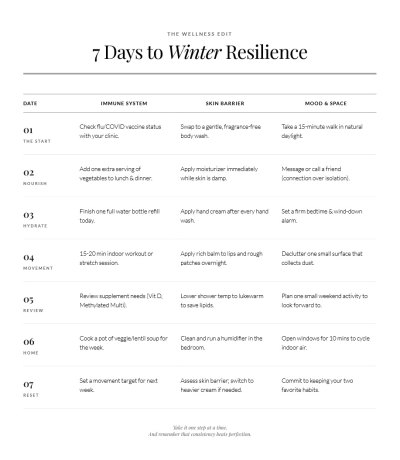
A 7-Day Winter Reset: Micro-Habits You Can Start This Week
Testing new habits for a week is often less intimidating than planning for a whole season.
How to Use This Plan
Each day includes:
- One immune or body habit.
- One skin habit.
- One mood or home habit.
Repeat the week, pull out your favorite days or return to it when winter starts to feel heavy.
Your Personal Winter Wellness Formula
Winter brings cold air, shorter days and more viruses circulating in the community. That pattern will not change. In temperate climates, people get sick more often in winter, not because cold air directly “causes” colds, but because dry, heated indoor environments, crowding and lower vitamin D levels make it easier for respiratory viruses to survive and spread while subtly weakening our immune defenses.
At the same time, your day-to-day decisions still count: a vaccine appointment you book, a pot of soup you cook, moisturizer you remember to apply, a short walk you fit in before dusk, a humidifier you clean and refill.
If this feels like a lot, scale it back.
Choose one habit for your body, one for your skin or home and one for your mood, and give them a week. Once they feel automatic, layer in another. Winter may never be your favorite season, but with a few science-informed routines, it can feel less like something you have to endure and more like a time you move through with a bit more ease.
Sources:
1. Isakov VA, Bogdanova AA, Bessonov VV, et al.
Effects of multivitamin, multimineral, and phytonutrient supplementation on nutrient status and biomarkers of heart health risk in a Russian population: A randomized, double blind, placebo-controlled study. Nutrients. 2018;10(2):120.
2. Sánchez MC, Herráiz A, Ciudad MJ, et al.
Metabolomics and biochemical benefits of multivitamin and multimineral supplementation in healthy individuals: A pilot study. Foods. 2024;13(14):2207.
3. Dwivedi S, Jain A, Chaudhury A, et al.
Multivitamin supplements: A market analysis. International Journal of Pharmaceutical Research. 2024;16(4):7–9.
4. Spector TD, Levy L.
Should healthy people take a vitamin D supplement in the winter months? BMJ. 2016;355:i6183.