A Zurich Plastic Surgeon on Why the Best Aesthetic Work Is the Work You Cannot See
Everyone knows someone who suddenly looks fantastic. A coworker back from vacation, a famous face on a talk show, a friend who swears she has just been sleeping better. The change is obvious, and the cause is invisible, and that is the point. Looking rested has become one of the most requested outcomes in aesthetic medicine, and behind it sits a method most people have never had explained to them.
Dr. Rosalia Luketina explains it for a living. The plastic and aesthetic surgeon runs a practice in Zurich that appeared in USA Today’s roundup of European aesthetic clinics worth traveling for, and she has spent this summer decoding the industry’s biggest shift for American readers, walking Hollywood Life through the undetectable era of celebrity work and sharing her expertise on skin and longevity in Elite Daily. Her specialty is the version of aesthetic medicine designed to be hard to spot.
“Good results are natural and not visible,” Luketina says. “You do not have to change your personality, and you should not have to change your face.”
So how can a face end up looking that well-rested? Luketina works from a protocol built around the individual patient, tailoring it to the needs of each person who walks through her doors.
It Starts With an Assessment, and Everything Is on the Table
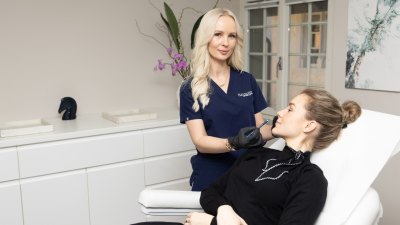
The biggest misunderstanding about modern aesthetic medicine is that patients pick a treatment the way they pick a haircut. In a serious clinic, the process runs in the opposite direction. The practitioner assesses the whole face first. Skin quality, sun damage, volume, muscle movement, the eye area and only then does a plan take shape.
That plan usually combines several small things instead of one big thing. A little light therapy for pigment. A regenerative injectable for skin quality. A precise micro dose where movement is starting to leave lines. Each piece on its own is minor. Together, they can target areas that contribute to the well-rested look that is in demand.
“Every face gets a plan built for that face,” Luketina says. “The treatments are the tools. The plan is the work.”
The Case for Combining Treatments in a Single Session
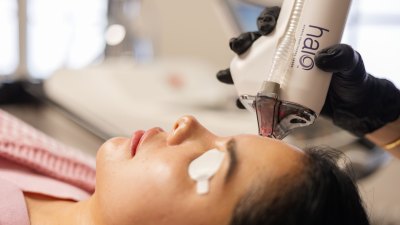
The technique reshaping clinic schedules is called treatment stacking, and it means combining several technologies in a single session. In Luketina’s practice, a typical stack pairs broadband light, which targets pigment and redness at the surface, with radiofrequency microneedling, which can tighten the deeper layers. Different depths, one appointment.
The appeal is practical. Stacking treats several layers in one visit with a single recovery period, which is why it appeals to patients who cannot disappear for a week, famous or otherwise. The catch is that running multiple energy-based treatments through skin in one session leaves no room for error. Settings have to be customized to the individual face, and the experience of the person at the controls is crucial for the results of the procedure.
That is where credentials stop being fine print. Luketina’s route to the treatment room ran through medical school in Graz, surgical training at Heidelberg and Hannover, and fellowships in Pittsburgh and Los Angeles, and she considers that depth the minimum for the combination work now in demand.
The Newest Arrival Tightens Where Surgeons Work
The next addition to her protocol arrives this summer. XERF, a radiofrequency device developed in South Korea and newly cleared in the US, tightens skin using two frequencies at once, reaching from the surface layers down to the same structural layer surgeons lift during a facelift. The treatment typically doesn’t require numbing and has almost no recovery time, so most patients can return to their day shortly after the appointment.
Luketina’s clinic is one of the first in Switzerland to offer it, and for her the appeal is exactly where the device does its work.
“This technology reaches the layer I know from the operating room,” she says. “Treating that depth with precision, in a session a patient can fit into a lunch break, is a genuine step forward for structural tightening.”
The Surgery Nobody Notices
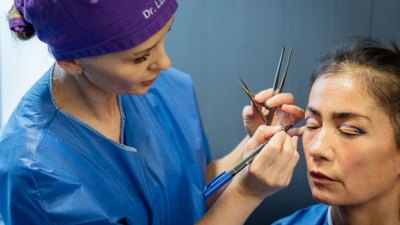
Here is the part of the rested look that creams and lasers cannot always deliver. The eyes. Heavy upper lids and under-eye bags are often the culprits of the “exhausted” appearance, unrelated to the quality of the skin that surrounds them. With age, it is common for the area to get more relaxed, and some patients opt for this surgery not just for cosmetic reasons, but also to improve their quality of life when the relaxed eyelids start disrupting their vision.
Blepharoplasty, eyelid surgery, is one of Luketina’s specialties, and it’s one of the operations that leaves few visible scars. The procedure removes excess skin and repositions tissue around the eyes through incisions hidden in the natural creases, leaving scars that are usually rarely visible. Done with precision, the aim is a face that looks awake, with no major changes in appearance that are often associated with other types of facial plastic surgery.
“The eyes are where fatigue shows first and where surgery shows least,” Luketina says. “When it is done well, patients hear that they look relaxed. Nobody asks what they had done, because nothing looks done.”
It is the same philosophy as the rest of the plan, carried into the operating room. Small, precise, invisible.
What Is Realistic, Honestly
For readers wondering what any of this means for their own mirror, Luketina’s outlook is refreshingly grounded. The rested look is not unachievable. The treatments behind it are available globally and at a range of price points. Where the expertise comes into play is combining them into individual protocols built around the needs of each patient.
Her advice for anyone considering a first step: expect an assessment before any recommendation, expect gradual results that build over months and find a practitioner worth trusting to occasionally recommend nothing at all.
The famous faces will keep collecting compliments and keeping their secrets. The method behind them, turns out, is not that hidden after all. It comes down to a thorough assessment, a well-thought-out plan and a practitioner who knows exactly when to stop.
This article is for informational purposes only and does not substitute for professional medical advice. If you are seeking medical advice, diagnosis or treatment, please consult a medical professional or healthcare provider.